
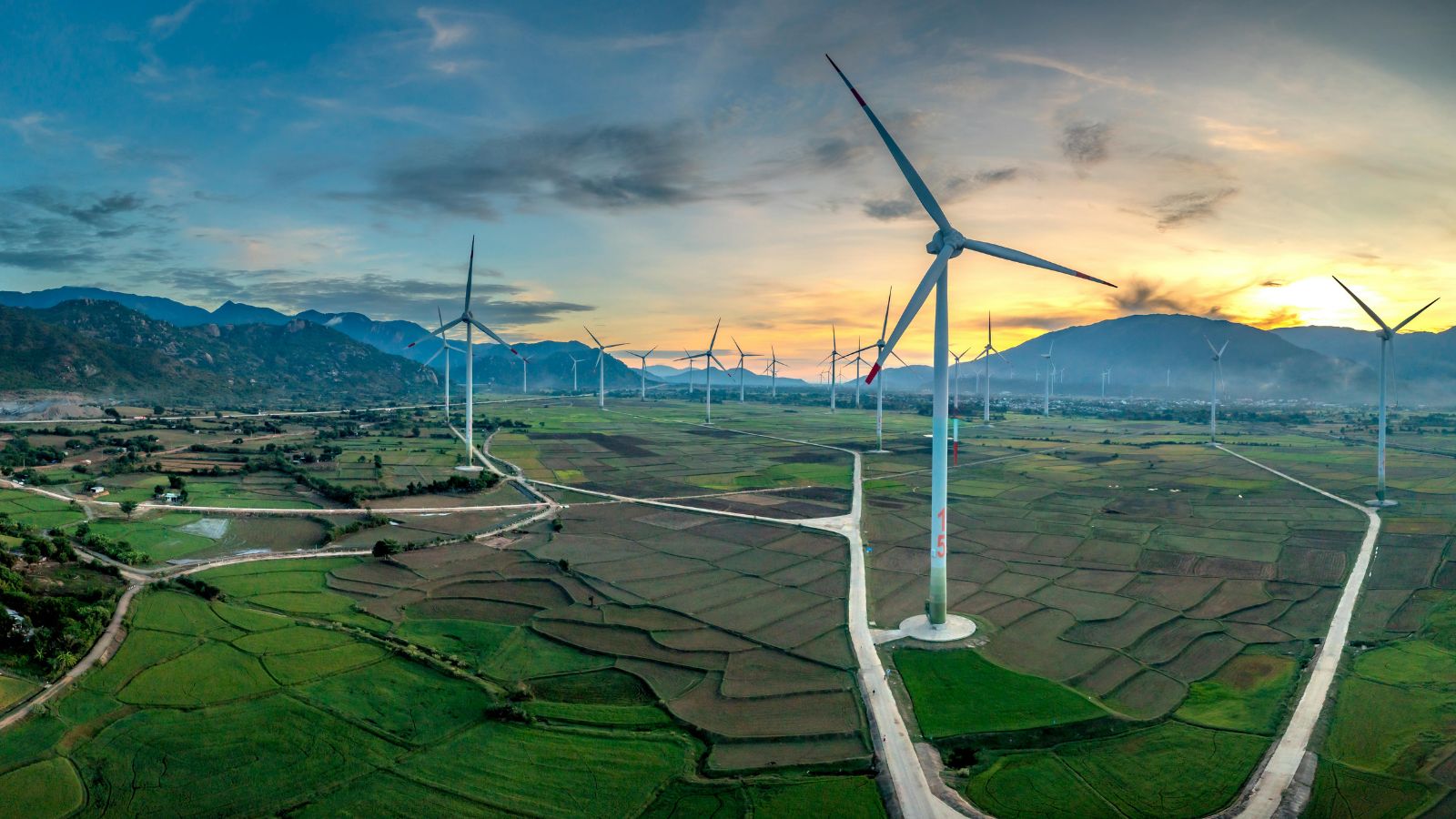
Renewable Energy Corridor Mapping Using Geospatial Intelligence
India’s renewable energy transition is now defined less by capacity addition and more by system-level spatial integration of generation, transmission, and demand centers.
As per the Central Electricity Authority (CEA) transmission planning framework (2026), India is targeting around 500 GW of non-fossil fuel capacity by 2030, requiring large-scale expansion of interstate transmission systems across renewable-rich states including Rajasthan, Gujarat, Tamil Nadu, Karnataka, Andhra Pradesh, and Maharashtra. CEA is also planning to enable integration of over 900 GW of non-fossil capacity by 2035–36, reflecting the scale of grid transformation required for long-term energy security.
In this context, Geospatial Intelligence GIS, satellite Earth Observation, wind and solar resource modelling, LiDAR-based validation, and AI-assisted grid planning are becoming foundational tools for designing renewable energy corridors that ensure spatial alignment between generation potential and transmission infrastructure.
Renewable Energy Corridors: From Project Planning to System-Level Design
Renewable Energy Corridors are structured transmission frameworks that connect high renewable resource zones with demand centers through optimized grid infrastructure. This approach builds on India’s Green Energy Corridor initiative but has evolved significantly due to rapid renewable expansion.
The CEA identifies Renewable Energy Zones (REZs) across multiple states with an aggregated scale of hundreds of gigawatts requiring coordinated evacuation planning. These REZs include Rajasthan, Gujarat, Madhya Pradesh, Karnataka, Tamil Nadu, Andhra Pradesh, Telangana, and Maharashtra.
The planning approach is now shifting from isolated project approvals to corridor-based spatial energy systems where generation clusters, substations, and transmission lines are co-designed using geospatial datasets.
Satellite Earth Observation and Renewable Resource Intelligence
Satellite Earth Observation forms the base layer for renewable energy corridor mapping. Solar resource estimation is derived from Global Horizontal Irradiance GHI datasets generated through satellite radiometric sensing and calibrated using ground meteorological stations. These datasets provide long-term spatial solar potential mapping critical for photovoltaic planning and investment assessment.
Wind resource mapping relies on mesoscale atmospheric models, global reanalysis datasets, and Wind LiDAR measurements that provide vertical wind profiles for accurate turbine siting and capacity estimation.
These datasets enable assessment of wind shear, turbulence intensity, and seasonal variability. India’s renewable geography remains highly concentrated, with over 55–60% of renewable generation clustered in Rajasthan, Gujarat, Karnataka, Tamil Nadu, and Maharashtra, reinforcing the need for corridor-based infrastructure planning rather than distributed expansion models.
GIS-Based Renewable Energy Zoning and Spatial Optimization
GIS-based multi-criteria analysis is now the standard methodology for renewable energy zoning in India. This approach integrates solar irradiance, wind density, land use classification, terrain slope, environmental exclusion zones, forest cover, water availability, and proximity to substations and transmission lines into a unified spatial decision model.
In Rajasthan, GIS analysis consistently identifies Jaisalmer, Bikaner, Barmer, and Jodhpur as high-suitability solar zones with irradiance levels exceeding 5.5 to 6.5 kWh per square meter per day. However, these same regions face significant transmission constraints due to evacuation infrastructure delays.
In Gujarat, spatial modelling identifies dual-resource corridors where coastal wind zones in Kutch align with inland solar potential, enabling hybrid renewable systems that improve grid stability and land-use efficiency. These GIS outputs are now directly used for state-level renewable planning and transmission sequencing.
Transmission Constraints and Grid Integration Challenges
A key constraint in India’s renewable expansion is the mismatch between fast generation deployment and slower transmission infrastructure development.
CEA’s 2026 transmission roadmap outlines the requirement to integrate approximately 537 GW of renewable energy by 2030, requiring major interstate transmission expansion. Despite this, real-world implementation shows significant congestion in renewable-rich states.
Sector-level assessments indicate that around 60 GW of renewable projects in Rajasthan are currently awaiting transmission connectivity as of 2026, reflecting evacuation bottlenecks and substation saturation in high-density solar zones.
This mismatch leads to project delays, curtailment risks, and underutilization of installed renewable capacity. Geospatial corridor mapping addresses this by optimizing transmission routing through terrain analysis, environmental sensitivity mapping, substation capacity assessment, and load flow alignment to reduce distance, losses, and ecological impact.
Advanced Geospatial Technologies in Corridor Planning
Modern renewable energy corridor planning integrates multiple advanced technologies beyond conventional GIS. Satellite remote sensing provides continuous monitoring of land use change and infrastructure expansion.
Machine learning models are used for energy yield forecasting, congestion risk modelling, and transmission optimization under multiple grid scenarios. Wind LiDAR systems provide high-resolution vertical wind profiling for turbine placement accuracy, while advanced solar irradiance models combine satellite and ground data for precise energy yield estimation.
Digital twin systems are emerging in planning environments to simulate renewable energy networks at regional scale, enabling scenario testing for generation expansion, storage integration, and transmission loading under varying demand conditions.
Case Study: Rajasthan Renewable Energy Corridor and Transmission Bottlenecks
Rajasthan is India’s largest renewable energy hub, particularly for solar power, with extremely high irradiance zones concentrated in western districts. These areas form the backbone of India’s solar expansion strategy and host large-scale solar parks such as Bhadla and Bikaner clusters.
However, Rajasthan also represents the most critical transmission bottleneck in the country. As of 2026, approximately 60 GW of renewable capacity remains delayed due to lack of transmission connectivity, reflecting structural constraints in evacuation infrastructure.
Geospatial corridor planning in Rajasthan focuses on connecting solar clusters to interstate transmission systems, particularly routes linking northern and western demand centers while avoiding ecologically sensitive zones such as Great Indian Bustard habitats. The objective is to ensure that renewable generation is not stranded due to infrastructure lag.
Case Study: Gujarat Renewable Energy Corridor and Hybrid Integration Strategy
Gujarat represents a diversified renewable energy ecosystem combining strong wind and solar resources. Coastal regions such as Kutch and Jamnagar form high-density wind corridors, while inland regions support large-scale solar deployment.
GIS-based corridor planning in Gujarat enables hybrid renewable energy parks where solar, wind, and battery storage systems are co-located to improve grid stability and reduce intermittency. Transmission planning focuses on integrating renewable clusters with high-capacity substations and interstate grid networks, ensuring efficient evacuation and minimizing curtailment risks. This integrated approach positions Gujarat as a model for grid-aligned renewable expansion.
Emerging Green Hydrogen Corridor Integration
An emerging extension of renewable energy corridor mapping is green hydrogen infrastructure planning under India’s National Green Hydrogen Mission. Geospatial intelligence is used to identify hydrogen production zones based on renewable energy availability, water resource access, and proximity to industrial demand centers such as refineries, fertilizer plants, and steel hubs.
This enables spatial co-optimization of renewable energy generation, hydrogen production, and industrial consumption within unified GIS frameworks. Green hydrogen corridors represent the next stage of energy system design where generation, storage, and consumption are spatially integrated through geospatial intelligence systems.
Strategic Opportunity for the Geospatial Industry
The expansion of renewable energy corridor mapping represents one of the largest geospatial application domains in India’s infrastructure ecosystem. Demand is increasing for satellite energy analytics platforms, GIS-based transmission optimization systems, LiDAR-enabled wind assessment tools, AI-based forecasting models, and digital twin infrastructure planning systems. Geospatial intelligence is transitioning from a support function to a core infrastructure layer that directly influences investment decisions, transmission design, and national energy security outcomes.
Conclusion: Geospatial Intelligence as the Backbone of Energy Transition
Renewable energy corridor mapping represents a fundamental transformation in India’s energy planning architecture. By integrating GIS, satellite Earth Observation, wind and solar resource modelling, LiDAR validation, and AI-based optimization, India is evolving toward a spatially intelligent energy system where generation and transmission are co-designed as a unified structure. As India advances toward its 500 GW non-fossil energy target and prepares for large-scale grid integration beyond 900 GW in the long term, geospatial intelligence will remain central to ensuring that renewable expansion is efficient, grid-compatible, environmentally sustainable, and economically resilient.


Leave a Comment