

Census 2027: India’s First Fully Digital Census with Geotagging and Technological Advancements
November 19, 2025 (Wednesday), New Delhi: The Government of India has announced that the upcoming Census 2027 will be the first fully digital census, incorporating geotagging of buildings and other advanced technological applications to ensure faster, more accurate, and efficient data collection. The exercise will be conducted by the Office of the Registrar General and Census Commissioner, India, under the Ministry of Home Affairs.
According to the official notification, the 16th Census of India will be conducted in two phases. The House-listing and Housing Census is expected to begin in April 2026, followed by the Population Enumeration phase in February 2027 for most parts of the country. For snow-bound and high-altitude areas, the reference date will be midnight of October 1, 2026, while for the rest of India, it will be midnight of March 1, 2027.
Census 2027 will mark a historic shift from the traditional paper-based process to a completely digital mode of data collection. Enumerators will use mobile applications on their smartphones or tablets to collect information, eliminating the need for printed schedules. Citizens will also be given the option of self-enumeration through an online portal, available in English, Hindi, and several regional languages.
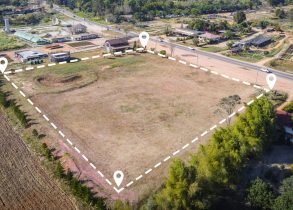
A key innovation in this census will be the geotagging of all residential and non-residential buildings across the country. This will be carried out using Digital Layout Mapping (DLM) and GIS-based systems to create a spatially referenced national database. Each structure will be assigned a unique geographic coordinate, allowing authorities to visualize and analyze demographic data in relation to physical locations.
The integration of geospatial technology will significantly enhance the quality and utility of census data. Geotagged information will help in identifying coverage gaps, improving data verification, and strengthening real-time monitoring through digital dashboards. This spatial component will also support evidence-based policymaking in areas such as urban and rural development, infrastructure planning, resource management, and disaster preparedness.
Census 2027 is part of India’s broader digital transformation initiative, aligning with national programmes such as Digital India and PM Gati Shakti. By combining digital data collection, real-time transmission, and geospatial mapping, the census aims to produce a faster, cleaner, and more transparent demographic record.
The transition to a digital and geospatially enabled census represents a landmark moment in India’s data governance framework. With these advancements, Census 2027 will not only redefine how demographic data is collected but also how it is used — paving the way for more accurate, inclusive, and future-ready planning at national and local levels.
Leave a Comment